

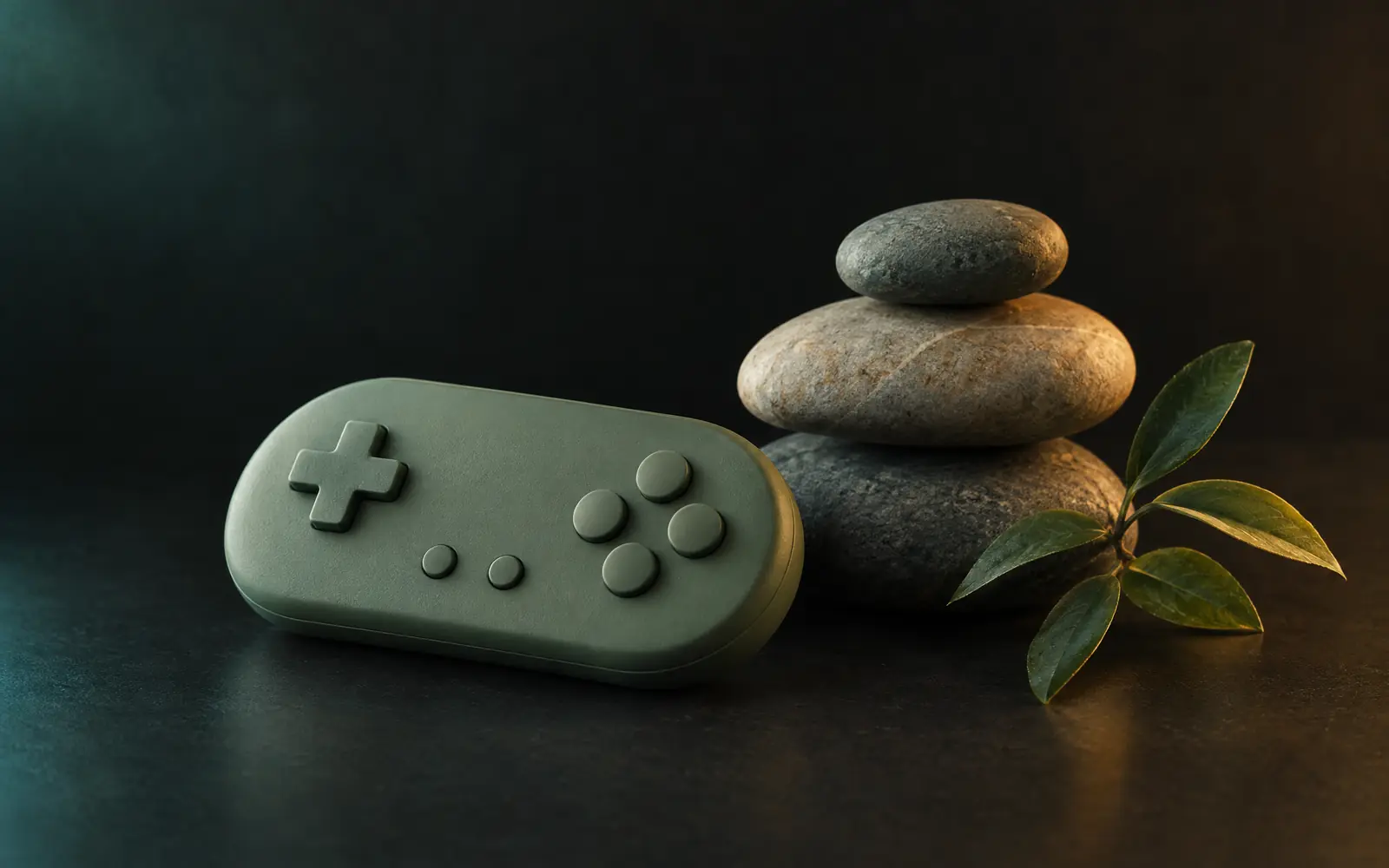
Most game mechanics were designed to maximise time on device: streaks, loot boxes, infinite feeds. As an independent researcher and the developer behind GameHarbor and MindHarbor, I am interested in the opposite question: can the same mechanics help people relax, reflect and recharge?
The problem with engagement-first design
Engagement metrics reward compulsion. Variable rewards and fear of missing out keep people playing, but they can also leave players more stressed than when they started. For wellbeing products, that is a contradiction.
Design principles for calm play
Short, complete sessions
A session should have a natural ending. Mini-games that last a few minutes and close with a sense of completion respect the player's time.
Rewards without pressure
Celebrate progress, but avoid punishing breaks. Streaks that reset to zero create anxiety; gentle progress that survives a missed day does not.
Sensory calm
Soft colour palettes, ambient sound, slower pacing and open spaces to explore. MindHarbor's open world is built around this idea: exploration as a way to decompress.
Companionship, carefully designed
GameHarbor includes Ollie, an AI companion. Conversational companions can make wellbeing tools feel less clinical, but they must be honest about being AI, avoid creating dependency, and point people to human help when it is needed.
What this means for brands
Gamification is not only for games. Loyalty programmes, learning apps and fitness challenges can use the same principles: clear goals, meaningful progress, social connection and respect for the user's time and attention. Brands that design for wellbeing earn trust that engagement hacks never will.
Open questions I am researching
- How do players describe their mood before and after short calm-play sessions?
- What makes an AI companion feel supportive without encouraging over-reliance?
- Which game mechanics transfer well to wellbeing in non-game products?
I share findings on the research page as this work develops.
A framework: calm mechanics versus compulsive mechanics
- Infinite feed: replaced by finite sessions with a clear ending
- Loss-based streaks: replaced by progress that survives breaks
- Variable reward slot mechanics: replaced by predictable, earned rewards
- Push notifications to pull players back: replaced by optional, gentle reminders
- Social comparison leaderboards: replaced by personal progress and cooperative goals
The calm alternative does not remove motivation; it changes the emotional tone of motivation from anxiety to satisfaction.
Lessons from building GameHarbor
GameHarbor presents a 3D virtual arcade where each mini-game is designed to be short and satisfying. Building it raised practical design questions: how long should a relaxing session be, how should rewards feel, and how should an AI companion talk to someone who might be stressed? Ollie, the octopus companion, is designed to be warm and playful while being clearly an AI.
Lessons from building MindHarbor
MindHarbor takes a different approach: an open world built for wandering. Exploration without pressure can be calming in itself. Building it with Three.js for the web and wrapping it for mobile showed how accessible 3D wellness experiences can be when they run in a browser.
Ethics of AI companions
AI companions in wellbeing products need clear boundaries:
- Always disclose that the companion is an AI
- Avoid language that encourages emotional dependency
- Recognise distress signals and point people to human support and professional resources
- Protect conversation data carefully
- Design for the user's long-term wellbeing, not session length
Why brands should care
Wellbeing is becoming a brand expectation. Companies that design apps, loyalty programmes and content with respect for attention will earn trust as audiences grow more aware of manipulative design.
Frequently asked questions
What is gamification for wellbeing?
It is the use of game design elements such as goals, progress and play to support relaxation, mindfulness or healthy habits, rather than to maximise screen time.
What games has Athul Iyju Jacob made?
He has built GameHarbor, a 3D virtual arcade for healthy gaming with an AI companion called Ollie, and MindHarbor, an open-world 3D wellness game, both published by Old Port Solutions LLC.

Ask A.I. Jacob about this
Questions about your own brand? Tap one, or type your own. Text or talk.
Cite or quote this article
You're welcome to quote this article with credit and a link. Suggested citation:
Iyju Jacob, A. (2026). Gamification and Digital Wellbeing: Can Games Help Us Relax Instead of Hook Us?. Athul Iyju Jacob. https://www.athuliyjujacob.com/gamification-digital-wellbeing