
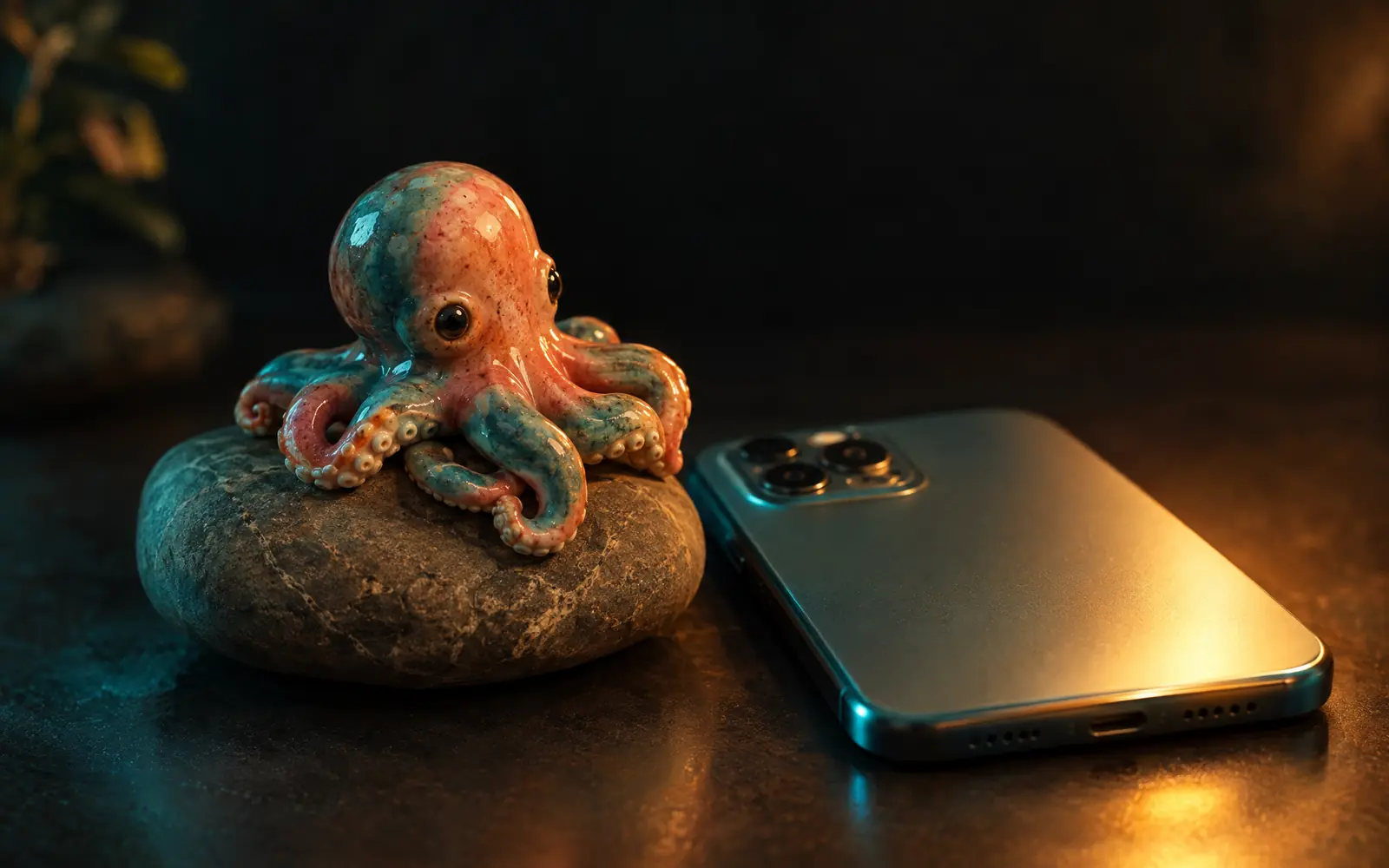
AI companions are appearing everywhere: in learning apps, games, wellness tools and customer service. They can make technology feel warmer and more helpful. They also raise real questions about honesty, dependency and wellbeing. These are my working notes from designing Ollie, the octopus AI companion in GameHarbor.
Why a companion at all?
Wellness tools can feel clinical. A friendly character lowers the barrier to engagement: players chat, joke and reflect in a way that feels natural. Ollie exists to make a calm space feel welcoming, not to replace human relationships or professional care.
Principle 1: Always honest about being AI
Users should never be confused about whether they are talking to a person. Ollie is clearly presented as an AI character. Honesty is the foundation of trust; once lost, it is very hard to rebuild.
Principle 2: Supportive, not dependent
Companion design can easily drift toward maximising time spent chatting. That is the wrong goal for a wellbeing product. Design choices that help:
- Encourage breaks and real-world activities
- Avoid language implying the companion needs the user or will be hurt if they leave
- Keep conversations purposeful and light rather than endless
Principle 3: Know the limits
An AI companion is not a therapist. When conversations signal distress, the companion should respond with care and point users to appropriate human support and professional resources rather than attempting to handle crises alone.
Principle 4: Personalisation with privacy
Letting users rename the companion or customise its personality increases attachment and enjoyment. But personalisation should not require collecting unnecessary personal data. Store only what improves the experience, protect it carefully and explain it clearly.
Principle 5: Character consistency
A companion with a stable personality, tone and set of boundaries feels trustworthy. Inconsistent behaviour, such as playful one moment and strangely formal the next, breaks immersion and trust.
Principle 6: Reliability
Users notice when a companion is unavailable. For an app expected to serve many players, architecture matters: graceful fallbacks, sensible rate limits and friendly messages if the AI service is temporarily unreachable.
What brands can learn
Brands adding chatbots or mascots powered by AI face the same questions. Be transparent, set boundaries, design for the user's real goal and hand over to humans when needed. A companion that respects users builds loyalty; one that manipulates them builds backlash.
Ongoing research questions
- Which companion behaviours do users describe as genuinely supportive?
- How does renaming or customising a companion change engagement and perceived trust?
- What design patterns reduce over-reliance while keeping the experience enjoyable?
I am developing these questions into working papers. Follow along on the research page and try Ollie yourself in GameHarbor.
Frequently asked questions
What makes an AI companion ethical?
Clear disclosure that it is AI, design that avoids fostering dependency, recognising its limits and pointing to human help, careful data handling and consistent behaviour.
Who is Ollie?
Ollie is the octopus AI companion in GameHarbor, a 3D wellness arcade created by Athul Iyju Jacob and published by Old Port Solutions LLC.

Ask A.I. Jacob about this
Questions about your own brand? Tap one, or type your own. Text or talk.
Cite or quote this article
You're welcome to quote this article with credit and a link. Suggested citation:
Iyju Jacob, A. (2026). Designing Ethical AI Companions: Lessons From Building Ollie in GameHarbor. Athul Iyju Jacob. https://www.athuliyjujacob.com/ai-companions-app-design-ethics